
According to the WB datat, February witnessed a 40 per cent rise in coal prices and 24 per cent in rice. To add to that fuel, food, fibre, and metals saw double-digit jump in global prices. Rice went up 24 per cent due to limited export supplies, deteriorating prospects for the next crop, and the impact of higher wheat prices. Lead jumped 18 per cent on falling stocks, strong battery demand in China, and weather-related supply reductions, also in China.

Mahindra & Mahindra (M&M) is implementing a comprehensive, multi-layered strategy to fortify its supply chains against geopolitical volatility, logistical challenges, and regulatory risks, drawing lessons from recent global disruptions.

The Indian government has issued a stern warning to industrial users who are reportedly procuring cheaper retail fuel instead of industrial-grade fuel, leading to significant losses for state-run oil marketing companies (OMCs) and potential local shortages. This diversion, driven by a substantial price difference between retail and bulk diesel, is adversely impacting OMCs, which are absorbing daily losses of approximately 550 crore to keep retail prices stable.

India's leading passenger vehicle manufacturers are significantly increasing investments and factory capacities, alongside planning major product launches for FY27, driven by strong confidence in sustained domestic demand growth despite global geopolitical tensions and supply chain risks.

'Once the market decides it wants to go up, it goes up -- no amount of bad news can really hold it back.'

The government on Thursday restored liquefied petroleum gas (LPG) supplies to commercial consumers such as hotels, restaurants and other businesses to pre-crisis levels, and lifted sector-specific restrictions imposed during the recent West Asia conflict, in a sign that energy supply concerns are easing as global markets stabilise.

India's exports reached a six-month high, growing by 18 per cent to USD 45.2 billion in May, driven by electronic goods, petroleum products, engineering items, and pharmaceuticals. However, the trade deficit widened to USD 28.21 billion due to a 10 per cent rise in imports, particularly petroleum products and gold, amidst surging crude oil prices.

Prices of key inputs up 44% to 74%; analysts expect earnings squeeze after a quarter or two.

Wholesale price inflation (WPI) softened to 0.13 per cent in September on easing in prices of food articles and manufactured items, government data showed on Tuesday. WPI-based inflation was 0.52 per cent in August and 1.91 per cent in September last year.

Headline inflation for March stood at 8.98 per cent, while food inflation was at 8.76 per cent for the week ended April 16.

Gold prices in the national capital fell by Rs 600 to Rs 1.64 lakh per 10 grams, influenced by tentative progress in US-Iran negotiations, which reduced demand for precious metals. However, unresolved tensions surrounding the Strait of Hormuz continue to keep traders cautious.

Gold prices experienced a significant decline in futures trading due to uncertainty surrounding geopolitical tensions in West Asia and conflicting statements regarding the conflict. Investors are also awaiting key macroeconomic data for further direction on interest rate cuts.
The Reserve Bank of India (RBI) on Thursday said there were signs of moderation in inflationary pressures but warned that commodity prices, despite falling in the second quarter, will remain at elevated levels.

Investors and companies should brace for higher commodity prices over the next few weeks in the backdrop of Russian troops attacking Ukraine on Thursday. Meanwhile, US President Joe Biden threatened new sanctions against Russia for an act of aggression against Ukraine. All this, analysts believe, can push prices of key commodities such as crude oil, ammonia, urea, potash, and phosphates higher.

Analysts predict that the ongoing conflict in West Asia, crude oil price fluctuations, and the US Federal Reserve's interest rate decision will significantly influence the Indian equity market this week.
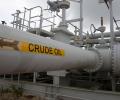
Crude oil prices experienced a significant drop following the announcement of a US-Iran ceasefire and the reopening of the Strait of Hormuz, leading to heavy selling by traders.

Analysts predict a surge in gold and silver prices as investors seek safe-haven assets due to escalating tensions in the Middle East. The impact on domestic prices will depend on the conflict's duration, with geopolitical factors and macroeconomic data also playing a role.
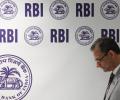
Uncertainties stemming from the West Asia crisis and its potential impact on inflation and economic growth were key factors in the Reserve Bank of India's Monetary Policy Committee (MPC) decision to maintain the status quo on interest rates, according to the recently released MPC meeting minutes.

The minister said this when asked about the impact of liquidity infusion by developed countries at a press conference on the sidelines of IMF-World Bank meetings.

Indian pharmaceutical companies are strategically increasing investments in the US market, focusing on specialty drugs, complex generics, respiratory products, and local manufacturing, despite a nearly 10 per cent fall in exports to the US in FY26 due to pricing pressure and competition in traditional generics.

Domestic food price inflation has witnessed a high volatility since mid-2009 due to both structural and transitory factors and a significant part of the recent increase is due to structural constraints, the RBI said in its third-quarter monetary policy review for FY 11.

TVS Motor Company is strategically positioned for sustained outperformance in the domestic two-wheeler industry, propelled by increasing market share in scooters, premium motorcycles, electric vehicles (EVs), and robust export growth, according to analysts.
Crude oil prices experienced a sharp decline after US President Donald Trump announced a temporary halt to military strikes on Iran's energy infrastructure, easing geopolitical tensions and supply disruption fears.

Opposition MPs in the Rajya Sabha criticised the Modi government's economic policies, citing the LPG crisis, lack of energy security, and concerns over the Economic Stabilisation Fund.

Indian equity benchmark indices experienced a significant drop in early trade, with the BSE Sensex falling over 525 points and the NSE Nifty down more than 164 points, primarily due to rising crude oil prices and ongoing uncertainty surrounding the US-Iran conflict.
The demand for oil and raw materials from the world's fastest growing economies -- China and India -- is providing a counterbalance against the slowdown in the US and in turn will lead to continued surge in commodities prices and trading volumes globally, a latest report says. Upheaval in equity markets and the continuing credit crisis would ensure the steady stream of investment into commodity markets, as financial players are attracted by the higher returns.

Nayara Energy, a private fuel retailer in India, has increased petrol and diesel prices following a surge in global oil prices due to Middle East tensions. This move contrasts with state-owned retailers who continue to freeze prices.

Moody's Ratings has downgraded India's growth forecast for financial year 2026-27 (FY27) to 6 per cent from 6.8 per cent, attributing the revision to weaker consumption and industrial activity, elevated energy prices, and rising input costs stemming from the West Asia conflict.

The Indian rupee plummeted to an all-time low of 95.80 against the US dollar, settling at 95.66, driven by elevated crude oil prices and escalating geopolitical tensions in West Asia, despite potential RBI intervention and import curbs on gold.

'Customers do not recover the original making charges paid on old jewellery. Sentimental value is lost when heirlooms are exchanged.'

Ola Electric is experiencing a significant rebound in the June quarter, with vehicle registrations in Q1 FY27 already exceeding the total registrations for Q4 FY26, indicating a strong recovery in demand.

The Indian rupee rebounded 50 paise from its all-time closing low to settle at 96.36 against the US dollar, driven by retreating crude oil prices, signs of easing geopolitical friction, and likely central bank intervention.

10 stocks from the Nifty 200 index that offer good growth potential and scope to deliver decent returns from current levels, based on brokerage estimates.

The Indian rupee depreciated 16 paise to settle at a fresh lifetime low of 96.86 against the US dollar, marking its ninth consecutive session of decline, driven by elevated global crude prices and a strong dollar.

Tata Motors' MD and CEO, Girish Wagh, has identified rising diesel prices as the most significant threat to India's commercial vehicle (CV) industry recovery, despite the sector recently surpassing its pre-FY19 wholesale peak. Diesel costs account for 25-50% of a truck operator's total cost of ownership, making any increase a critical concern for fleet economics.

Precious metal prices, particularly gold and silver, experienced a significant surge in the national capital as investors sought safe-haven assets amid escalating hostilities in the Middle East.

Earlier, most investors counted on traditional options like fixed deposits, gold, or property. But in 2026, you will have access to a much wider range of opportunities across different markets and sectors.
Precious metal prices surged in futures trading, with silver hitting Rs 2.93 lakh per kg and gold nearing Rs 1.68 lakh per 10 grams, driven by safe-haven demand following US-Israel strikes in Iran and retaliatory attacks.
